
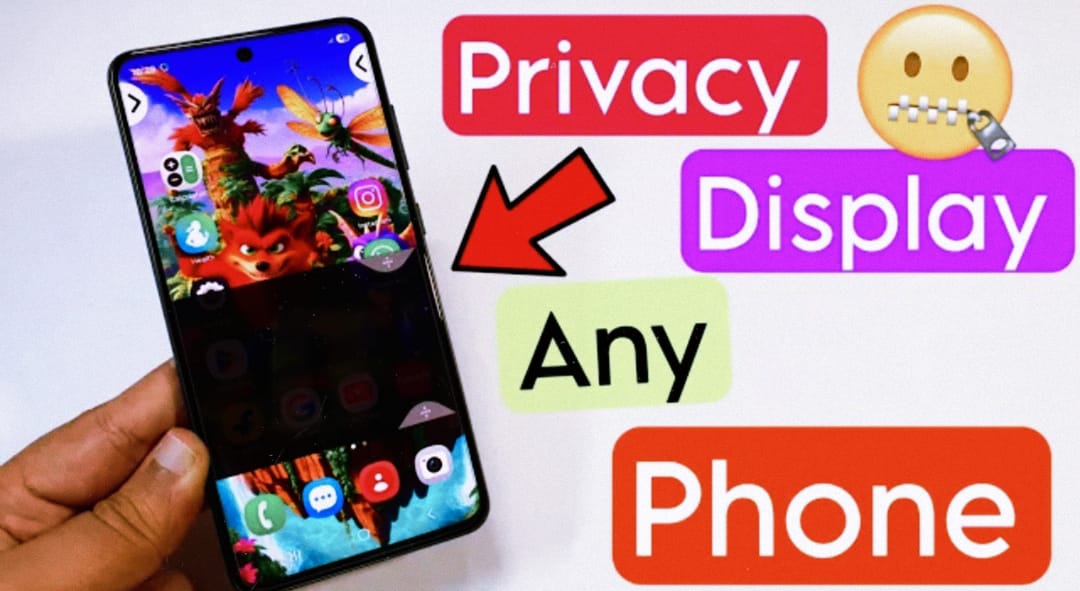
In today’s digital era, smartphones are not just a means of communication, but have also become the most important storage of personal data. Photos, banking apps, private chats, emails and social media accounts are all stored in our phones. That’s why mobile privacy has become a very important topic in 2026. Many people use their phones in public places and are worried that someone might see their screen.
A smart solution to this problem is the Privacy Screen feature. This feature blurs or darkens your mobile screen from the side angles so that only you can read the content by looking straight at it. This option is often built-in to high-end phones, but in 2026, with a few simple tricks and apps, you can add a privacy screen option to any Android phone. In this guide, we’ll explain step-by-step how this feature works and how you can activate it on your phone.
Why This Feature/Technology Works Better in 2026
Smartphone technology has advanced significantly in 2026. Thanks to Android updates and third-party apps, mobile security and privacy features have improved significantly. Now, developers are creating tools that work on every Android device, whether it’s a budget phone or a flagship device.
Display technology has also improved. Brightness control, overlay permissions, and accessibility features have become more powerful in modern smartphones. These features allow privacy screen apps to create a protective layer in the background, keeping the screen visible only from direct angles.
Another reason is that people are increasingly using remote work, online banking, and digital payments. Privacy has become crucial when using mobile phones on public transport, in offices, and in cafes. Therefore, privacy screen apps and settings are becoming a trend in 2026.
How to Use Privacy Screen Options for Best Results
If you want to use the privacy screen feature on your Android phone, there are two simple methods available. A basic setup that’s perfect for beginners, and a more advanced method that offers more customization.
Step 1: Basic Setup or First Method
The first and easiest way is to install a reliable privacy screen app from the Play Store. After installation, when you open the app, it asks for overlay permission. This permission is necessary because it allows the app to place an invisible filter over the screen.
After allowing permission, you get the option to control brightness and angle. From here, you can decide how dim or blurry the screen will be when viewed from the side. You can adjust the filter intensity to suit your needs.
When this feature is activated, the phone continues to use normally, but if someone tries to view the screen from a side angle, the content will not be clearly visible. This way, you can maintain your privacy even in public places.
Step 2: Advanced or Pro Method
If you want more control, you can use advanced settings. Some privacy apps have a scheduling option where you can automatically activate the privacy screen at specific times.
For example, if you commute to work or university daily, you can automatically enable the privacy filter for your commute time. Similarly, some apps also have individual app protection. This means that the privacy screen is activated only when you open WhatsApp, the gallery, or banking apps.
Another useful feature for advanced users is gesture activation. You can turn the privacy filter on or off by making a specific gesture on the screen. This feature is fast and convenient.
Professional Tips to Get DSLR-Level or Pro Results
The privacy screen feature seems simple, but if used correctly, it can produce quite professional results. The first tip is to balance the filter intensity. A filter that is too dark can make it difficult for you to see the screen.
Another important thing is brightness management. If your screen brightness is too low, the effect of the privacy filter is reduced. Therefore, the filter is more effective at medium brightness.
Another mistake beginners make is keeping the privacy screen active all the time. This can increase battery consumption slightly. The best approach is to use it only when necessary.
If you work in public places, like coffee shops or offices, using your phone at a slight tilt also improves privacy. This simple trick makes screen visibility more secure.
Best Settings, Apps, or Tools (If Applicable)
If you want to add a privacy screen feature to your Android phone, some apps can prove to be very useful. The main function of these apps is to create a screen overlay that restricts viewing angles.
Users often use privacy filter apps, which create an adjustable shade over the screen. This shade is transparent only from a direct angle, while it appears dark from the side.
In addition, some phones also have built-in display settings that provide blue light filter and screen dimming options. Combining these settings with privacy apps can make the results even more effective.
Physical privacy screen protectors are also available on the market that are applied to the phone screen. These are like tempered glass, but their viewing angles are limited. Combining software and hardware solutions provides the best privacy.
Common Problems and How to Fix Them
Some users experience a few minor issues when using privacy screen apps. The most common issue is that the filter makes the screen too dark.
The solution to this problem is simple. Go to the app settings and slightly reduce the filter intensity. This makes the screen comfortable for normal use.
Another issue is sometimes the notification panel or keyboard visibility. If the keyboard isn’t clearly visible, you can exclude specific apps from the app.
Sometimes, Android battery optimization also disables background apps. If the privacy screen automatically turns off, it’s helpful to disable battery optimization in your phone’s settings.
Final Thoughts
In 2026, smartphone privacy is not just an option, but a necessity. Our phones contain both personal and professional data, making screen protection crucial. The privacy screen feature is a simple yet powerful solution that keeps your mobile content safe from prying eyes.
The good news is that you don’t need an expensive smartphone to use this feature. With a few simple apps and smart settings, you can add the privacy screen option to any Android phone.
If you regularly use your phone in public places, travel, or work in an office environment, this feature can take your digital privacy to the next level. With a little setup and the correct settings, you can make your phone more secure and professional.