If you run a website, write a blog, or want to grow an online business, Google indexing remains one of the most important SEO challenges in 2026. Many websites publish good content, but their pages don’t appear in Google search results. This means you could miss out on valuable traffic, leads, and revenue.
Google’s search system in 2026 is smarter than ever before. Search engines deeply evaluate content quality, user experience, and content relevance. Therefore, simply publishing a page isn’t enough. You need to ensure that Google discovers, crawls, and indexes your pages.
In this guide, we’ll explain in simple Roman Urdu how to identify and fix page indexing issues so your website performs better in search results.
Why This Feature/Technology Works Better in 2026
Google’s crawling and indexing systems will be more advanced in 2026. The search engine now monitors website quality signals in near real-time and tries to avoid indexing low-value or duplicate pages.
Google Search Console now provides website owners with more detailed reports about indexing status. This allows webmasters to easily understand which pages have been successfully indexed and which are being excluded due to technical or content issues.
Mobile-first indexing has also become standard. This means that the quality and speed of the mobile version plays a significant role in the indexing process. Websites that are fast, user-friendly, and technically optimized generally have better indexing speeds.
How to Use Fix Pages Not Indexed on Google for Best Results
Step 1: Basic Setup or First Method
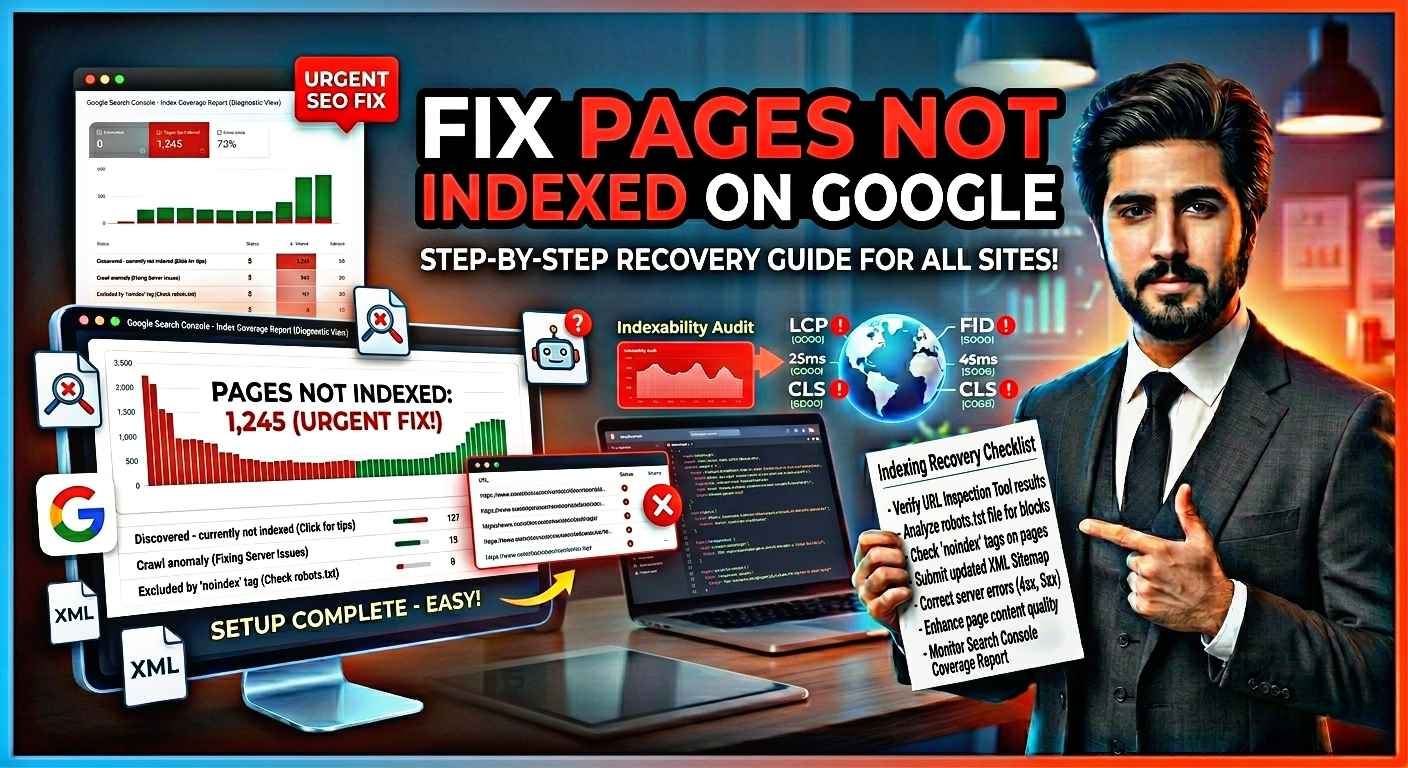
First, verify your website in Google Search Console. After opening Search Console, check the Pages Report or Indexing Report. Here you’ll find out which URLs are indexed and which aren’t.
If a page has a status of “Crawled – Currently Not Indexed” or “Discovered – Currently Not Indexed,” review the page’s quality. Check if the content is unique, if headings are used correctly, and if the page provides useful information to users.
After this, update the XML sitemap and submit it to Search Console. The sitemap helps Google discover important pages on the website. After submitting the sitemap, you can manually send an indexing request to specific pages from the URL Inspection Tool.
Internal linking is also very important. Link important pages on your website to other related articles so Google crawlers can easily access them.
Step 2: Advanced or Pro Method
At the Advanced level, it’s important to optimize your website’s crawlability and technical SEO. Check the Robots.txt file and confirm that important pages aren’t accidentally blocked.
Also review canonical tags. Sometimes, incorrect canonical settings confuse Google, preventing the original page from being indexed. Putting the correct canonical URL on every page improves indexing.
Page speed optimization is also part of an advanced strategy. Slow-loading pages often waste crawl budget. Using image compression, caching, and lightweight themes improves performance.
If your website contains duplicate content, merge or update it. Google prioritizes unique and valuable pages. Therefore, enhancing thin content pages increases indexing success rates.
Professional Tips to Get DSLR-Level or Pro Results
Professional SEO experts focus not only on technical settings when solving indexing issues, but also on improving content quality.
Write each article according to clear user intent. If the user is looking for a solution to a problem, the content should solve that problem completely. Short and superficial content can create challenges for both indexing and ranking.
After publishing new pages, it’s helpful to link them to the homepage, category pages, and related articles. This helps Google crawlers better understand the page’s importance.
A common mistake is that website owners create too many low-quality pages. Quality is always more important than quantity. Shorter, but valuable content is better for indexing.
Also, perform regular content audits. Updating old articles and removing outdated information sends positive signals to Google.
Best Settings, Apps, or Tools (If Applicable)
Google Search Console is the most essential tool for monitoring indexing issues. It allows access to URL inspection, sitemap submission, and indexing reports.
Google Analytics helps understand user behavior. Website quality signals improve when users engage with content.
SEO plugins like Yoast SEO and Rank Math are useful options for WordPress users. These plugins simplify sitemap generation, meta settings, and indexing controls.
Caching plugins and image optimization tools are also helpful for improving page speed. Fast websites generally perform better in Google’s crawling and indexing processes.
Website crawl tools can be used for technical audits, which identify broken links, redirect issues, and indexing errors.
Common Problems and How to Fix Them
Many beginners encounter the “Page Not Indexed” issue. This is often caused by low-quality content or technical blocking. Improving the content and submitting an indexing request can resolve the problem.
Duplicate content is also a common issue. If multiple URLs are showing the same content, use canonical tags and consolidate unnecessary pages.
Sometimes the noindex tag is activated by mistake. This issue can be identified by checking the website settings and page source code.
Slow website performance can also cause indexing delays. Improving hosting quality and optimizing heavy files is helpful.
If the website is brand new, indexing may take some time. Regular updates and proper internal linking help Google discover the website.
Final Thoughts
Google indexing in 2026 is not just a technical process but a reflection of overall website quality. If you create valuable content, optimize technical SEO, and regularly monitor Search Console reports, indexing issues can be largely avoided.
The most important thing is consistency. Update the website regularly, publish user-focused content, and keep an eye on indexing reports. Small improvements can translate into significant SEO success over time. Once your pages are properly indexed, your chances of organic traffic, visibility, and online growth will naturally increase.
How long does it take Google to index my page?
Google can take anywhere from a few hours to several weeks to index a page. This depends on website authority and crawl frequency.
What does “Crawled but Currently Not Indexed” mean?
This means Google has crawled the page but has not yet decided to index it. This status is often due to content quality or relevance.
Is it necessary to submit a sitemap?
Yes, a sitemap helps Google understand the website structure and discover important pages.
Does duplicate content affect indexing?
Yes, duplicate content can confuse Google and create indexing or ranking issues.
Why is Google Search Console important for fixing indexing issues?
This tool provides indexing status, crawl errors, and URL inspection features, which are very valuable for website optimization.