
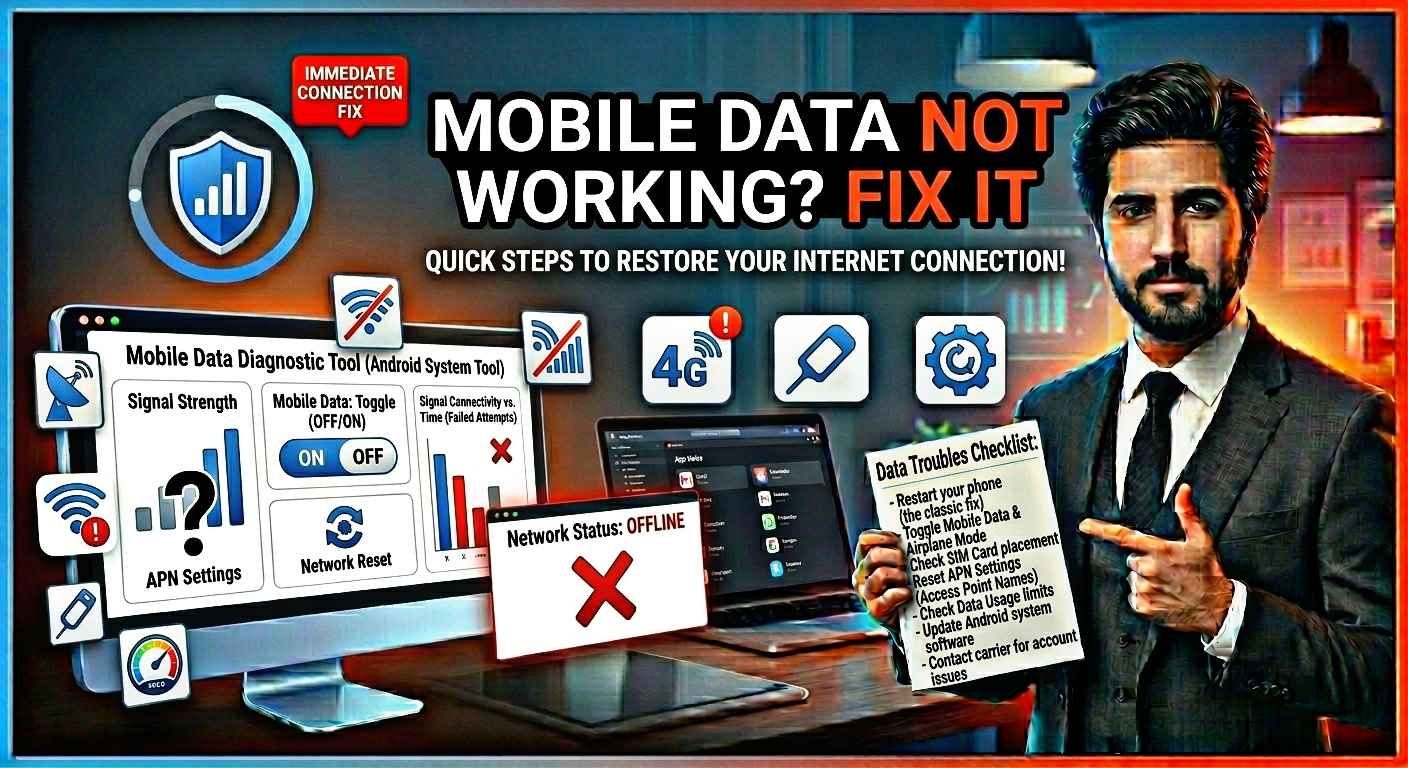
In 2026, mobile internet has become an essential part of our daily lives. Online classes, remote work, video streaming, social media, and digital banking all rely on mobile data. But when mobile data suddenly stops working, it can be quite frustrating. Many users don’t get internet access despite having a full signal, while others face slow speeds or connection errors.
The good news is that mobile data issues are mostly caused by simple settings or network configuration issues. If you troubleshoot correctly, the problem can be resolved within a few minutes. In this guide, we’ll take a look at the latest smartphone and network technologies of 2026 and discuss practical solutions useful for both beginners and advanced users.
Why This Feature/Technology Works Better in 2026
In 2026, telecom networks have become significantly more advanced. 5G coverage has expanded significantly, and smartphones are coming equipped with intelligent network switching features. Devices now automatically select the strongest available network and optimize connectivity in the background.
Modern Android and iPhone devices also include AI-based network management systems that detect weak signals, network congestion, and connectivity issues and automatically adjust. This makes mobile data troubleshooting much simpler than before.
Telecom companies have also improved APN management and network authentication systems. This reduces the need for users to manually configure settings. However, some situations require manual fixes, which are important to know about.
How to Use Mobile Data Fixes for Best Results
Step 1: Basic Setup or First Method
First, check your smartphone’s mobile data status. Sometimes users accidentally turn off mobile data or leave airplane mode enabled. Open the Quick Settings panel and confirm that mobile data is active and airplane mode is disabled.
After this, restart your phone. Restarting automatically removes temporary network glitches and software conflicts. Many connectivity problems are resolved simply by restarting the device.
If the issue persists, remove and reinsert the SIM card. Sometimes a communication error occurs between the SIM and the device, which resolves with reinsertion.
It’s also important to check network coverage. If you’re in a basement, elevator, or remote area, you may not be able to access the internet due to a weak signal. Go to an open area and test the connection.
Step 2: Advanced or Pro Method
If basic troubleshooting doesn’t work, you should verify your APN settings. The APN (Access Point Name) establishes communication between the mobile network and the internet. Incorrect APN settings can completely disable mobile data.
Go to your phone settings, open the Mobile Network section, and check the APN configuration. If the settings appear incorrect, use the network provider’s recommended APN details or reset the APN to its default settings.
The network mode is also an important factor. 5G or 4G networks can be unstable in some areas. In such cases, manually selecting LTE or automatic network selection may yield better results.
Advanced users can also reset network settings. This process restores Wi-Fi, Bluetooth, and mobile network configurations to a fresh state. This method is considered quite effective in resolving software-related connectivity issues.
Professional Tips to Get DSLR-Level or Pro Results
Simply turning on the internet isn’t enough to improve mobile data performance. Professional users follow some additional practices that significantly improve the overall experience.
Keeping phone software updated is crucial. New updates include network stability improvements and bug fixes that reduce connectivity issues.
Controlling background applications is also helpful. Many apps constantly use the internet, which consumes bandwidth and can slow down speeds. Enabling Data Saver mode is a useful option.
A common mistake is that users assume the internet will be perfect just because they see signal bars. In reality, network congestion also affects speed. Speeds can naturally slow down during peak hours, even if the signal is full.
Battery saver mode can also sometimes limit network performance. If mobile data is exhibiting unusual behavior, you should test by temporarily disabling battery optimization settings.
Best Settings, Apps, or Tools (If Applicable)
Smartphones in 2026 have several built-in tools that help with network diagnosis and optimization. Both Android and iPhone platforms have network reset and connectivity diagnostics features.
Built-in tools like Google Network Diagnostics monitor connectivity status and help identify potential issues. Similarly, official apps from telecom providers also provide network status and service alerts.
Data Saver mode is useful for users who use limited data packages. It reduces background consumption and reserves available bandwidth for important applications.
VPN services can also improve connectivity in some cases, but low-quality VPN applications can negatively affect speed. Therefore, trustworthy and reliable services should be preferred.
Automatic network selection is generally the best option because the device automatically chooses the strongest available connection. Manual network locking is only recommended in specific troubleshooting situations.
Common Problems and How to Fix Them
The most common problem is not getting internet access even when mobile data is connected. In this situation, turning airplane mode on and off or restarting the phone is often an effective solution.
Some users get a “No Internet Connection” error even when a signal is available. In this case, verifying the APN settings and performing a network reset may be helpful.
Slow internet speeds are also a common complaint. This can be caused by network congestion, weak coverage, or excessive background data usage. Testing in an open location and closing unnecessary apps is helpful.
Sometimes, SIM card issues can also cause connectivity problems. If the SIM doesn’t work on other devices, getting a replacement from your telecom operator is a better option.
Software bugs can also cause internet issues. Therefore, it’s important to regularly install operating system and carrier updates.
Final Thoughts
Mobile data connectivity in 2026 has become more reliable and advanced than ever before, but occasional issues can still arise. Fortunately, most problems are resolved with simple troubleshooting steps. The most effective solutions include verifying mobile data settings, restarting the device, checking the APN configuration, and performing a network reset.
If you follow these practical tips, you can quickly diagnose and fix mobile internet problems. Whether you’re a student, content creator, freelancer, or business user, a stable mobile data connection improves your productivity and online experience. By performing regular updates and maintaining the correct settings, you can avoid future connectivity issues.
Mobile data is on, but why isn’t the internet working?
This could be due to incorrect APN settings, a temporary network issue, or a SIM card problem. Try restarting and resetting the network first.
Does resetting the network delete my data?
No, a network reset only resets connectivity settings. Personal files and apps are not deleted.
What are APN settings?
An APN, or Access Point Name, is a necessary configuration for connecting a mobile network to the internet.
How can you improve slow mobile data speeds?
Close background apps, move to a strong signal area, and keep software updates installed.
When should I contact my telecom operator?
If all troubleshooting methods fail and the SIM does not work in other devices, you should contact operator support.